Advertisement
Advertisement
constellation
[ kon-stuh-ley-shuhn ]
noun
- Astronomy.
- any of various groups of stars to which definite names have been given, as Ursa Major, Ursa Minor, Boötes, Cancer, Orion.
- the section of the heavens occupied by such a group.
- Astrology.
- the grouping or relative position of the stars as supposed to influence events, especially at a person's birth.
- Obsolete. character as presumed to be determined by the stars.
- a group or configuration of ideas, feelings, characteristics, objects, etc., that are related in some way:
a constellation of qualities that made her particularly suited to the job.
- any brilliant, outstanding group or assemblage:
a constellation of great scientists.
constellation
/ ˌkɒnstɪˈleɪʃən; -trɪ; kənˈstɛlətərɪ /
noun
- any of the 88 groups of stars as seen from the earth and the solar system, many of which were named by the ancient Greeks after animals, objects, or mythological persons
- an area on the celestial sphere containing such a group
- a gathering of brilliant or famous people or things
- psychoanal a group of ideas felt to be related
constellation
/ kŏn′stə-lā′shən /
- A group of stars seen as forming a figure or design in the sky, especially one of 88 officially recognized groups, many of which are based on mythological traditions from ancient Greek and Middle Eastern civilizations.
- An area of the sky occupied by one of the 88 recognized constellations. These irregularly defined areas completely fill the celestial sphere and divide it into nonoverlapping sections used in describing the location of celestial objects.
constellation
- An easily recognized group of stars that appear to be located close together in the sky and that form a picture if lines connecting them are imagined. Constellations are usually named after an animal, a character from mythology , or a common object. ( See Big Dipper , Ursa Major , and Ursa Minor .)
Discover More
Derived Forms
- constellatory, adjective
- ˌconstelˈlational, adjective
Discover More
Other Words From
- con·stel·la·to·ry [k, uh, n-, stel, -, uh, -tawr-ee, -tohr-ee], adjective
- subcon·stel·lation noun
Discover More
Word History and Origins
Origin of constellation1
Discover More
Word History and Origins
Origin of constellation1
Discover More
A Closer Look
Discover More
Example Sentences
The Global Positioning System consists of a constellation of around 30 satellites orbiting 20,000 kilometers above Earth.
It has now launched almost 700 satellites of a planned constellation of thousands and said service could begin in parts of North America by the end of the year.
OneWeb founder Greg Wyler has argued that his company’s constellation was less likely to result in satellite collisions thanks to its higher orbit of 1,200 kilometers.
After all, the fastest and most effective solution would be to stop launching constellations—and that’s simply a nonstarter.
The report recommends that companies refrain from putting constellations above an altitude of 600 kilometers.
HL Tauri is about 450 light-years away in the constellation of Taurus.
Today, all that remains of these Jewish holiday centers is a constellation of derelict buildings.
By the end of the book the stars converge into a constellation.
The political constellation is dotted with a range of parties representing different interests, with overlap between them.
In France, a whole constellation of (relatively) young thinkers are transforming it: Foucault, Althusser, Deleuze, etc.
Although eclipsed in show by some present, theirs was a new constellation, and they must support observation as they could.
After death his spirit appeared at certain times and seasons as a planet, star, or constellation.
What's your price on a whole constellation with a lovers' moon thrown in?
It is not easy to guess why this constellation should have been called the Bear.
The first star of which the distance was calculated is in this constellation.
Advertisement
Discover More
About This Word
What else does constellation mean?
A constellation is a way of thinking about sexuality by considering sex, gender, sexual orientation, and gender expression as separate components (like stars) that together make up one’s gender and sexual identity (constellation).
What are some other words related to constellation?
Where does constellation come from?
The idea behind a gender and sexuality constellation comes from the fact that one’s identity isn’t one-dimensional (i.e., simply gay or straight, male or female). Instead, one’s identity is comprised of sex, gender, sexual orientation, and gender expression. If you liken each of these identities to a star, they then together make up your identity constellation, like a group of stars in the night sky (e.g., Orion).
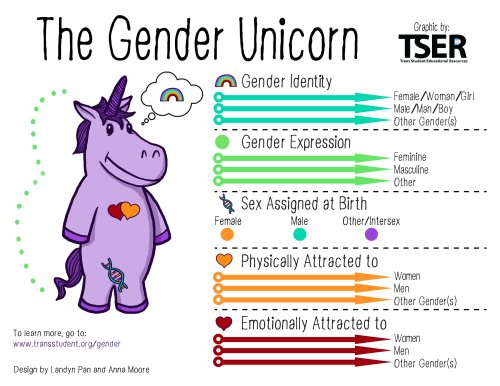
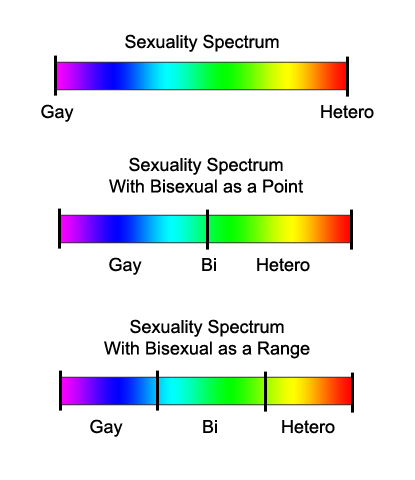
The constellation metaphor also understands gender and sexual identity as existing on a spectrum. Sexual orientation can range from heterosexual to gay, and sexuality from sexual to asexual. Gender can range from male to female or from gender to agender. The concept of the constellation helps people account for the complexity of gender and sexual identity.
The term constellation dates back to at least 2005, when it was used by University of Birmingham professor of Sociology Deborah Youdell in her article “Sex-Gender-Sexuality: How Sex, Gender and Sexuality Constellations are Constituted in Secondary Schools.” In it, she argues that “constituting constellations” would be helpful in creating “both possibilities and constraints for ‘who’ students can be” in terms of their sex, gender, and sexuality.
The term constellation spread in the 2010s with the greater visibility and inclusion of gender and sexual diversity, especially online on social media platforms like Tumblr.
How is constellation used in real life?
Constellation is most commonly used to educate people who are unfamiliar with the intricacies of gender and sexuality (whether on social media or in the general public).
As with gender, sexuality is a constellation of varying degrees of attractions on various planes and axes.
— Eli (@hir_or_their) October 7, 2015
The concept of an identity constellation is typically illustrated not through images of stars but via such figures as the gender unicorn or gingerbread person.

More examples of constellation:
“The paper argues for an understanding of sex–gender–sexuality joined together in discursive chains and intersecting with further identity categories. As such, the paper suggests that subjectivities might helpfully be thought in terms of constituting constellations that create both possibilities and constraints for ‘who’ students can be.”
—Deborah Youdell, “Sex-gender-sexuality: how sex, gender, and sexuality constellations are constituted in secondary schools,” 2005
Advertisement
Advertisement
Advertisement
Browse